Can you use aluminum foil in an air fryer? In many cases, yes, but the safe answer needs more care. Aluminum foil can help catch marinades, protect delicate foods, and simplify cleanup. However, it can also block circulating air, touch the heating element, or lift toward the fan. The result may be uneven browning, burnt edges, or damaged equipment. It is not a harmless shortcut.
Air-fryer safety educator Mary Rodgers offers a useful reminder: “Foil can be helpful, but it must never interfere with airflow or heating elements.” This principle fits most air-fryer designs, although each model has different instructions. Check the manufacturer’s manual before placing foil inside. Some brands allow it in the basket. Others discourage it completely. That detail matters.
Use a small, tightly fitted sheet beneath food, not across the entire basket. Keep foil away from the basket’s holes when air circulation is essential. Never place foil under loose, lightweight food before cooking. A strong fan may move it upward. Avoid acidic ingredients, such as tomatoes, vinegar, or citrus marinades, because they may react with aluminum. Do not preheat with loose foil inside.
The answer is more practical than perfect. Food may cook differently after foil is added. I have seen cleanup become easier, while crispness becomes weaker. This 2026 guide explains when foil works, when parchment is better, and which mistakes deserve attention. Small details matter. Safety comes before convenience.
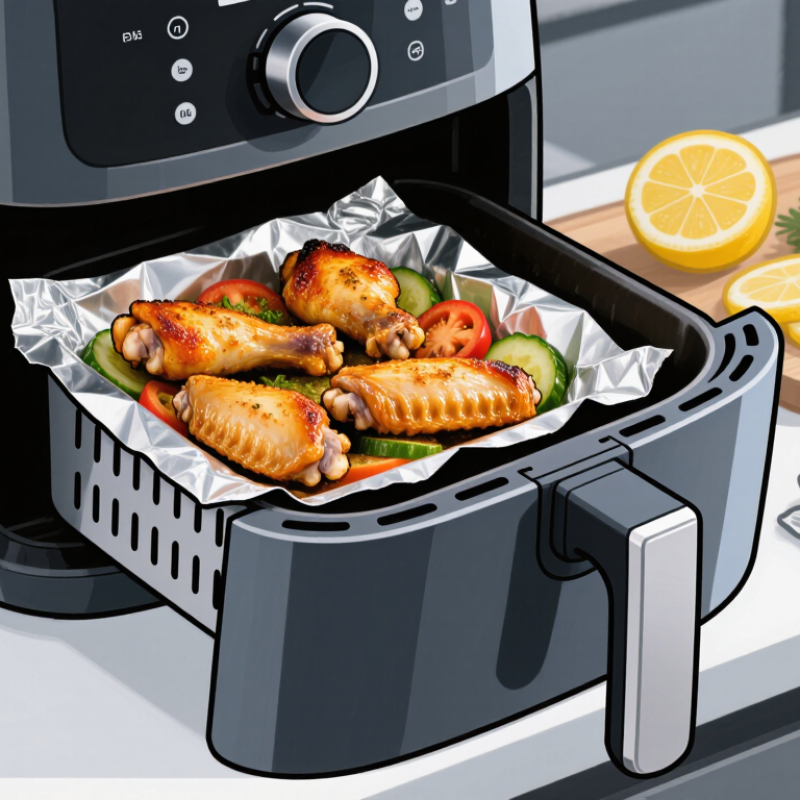
Aluminum foil changes how heat and air reach your food. It can catch oil, protect delicate surfaces, and reduce cleanup. However, it may also block circulating air beneath the food. That often creates a pale underside and uneven browning. Loose foil can lift toward the heating element, especially with lightweight food. That is a real safety concern.
The U.S. Department of Agriculture confirms that aluminum foil can safely cover food during cooking. Still, the U.S. Food and Drug Administration warns that aluminum transfer increases with acidic or salty foods. The European Food Safety Authority set a tolerable weekly intake of 1 milligram per kilogram of body weight for aluminum. These reports support a careful approach, not unlimited use. I once assumed foil always improved air-fryer results. That assumption was too simple.
Tips: Use a small, perforated sheet under food, not across the entire basket. Keep foil away from the heating element. Secure it with food before switching on the appliance. Avoid wrapping tomatoes, citrus-marinated meat, or heavily salted foods for long cooking times. Check your appliance manual, because basket designs differ. A reusable silicone liner may provide steadier airflow, but it can also reduce crispness. Record your cooking time and texture; small adjustments matter.
Aluminum foil can be used in an air fryer, but safety depends on placement and airflow. Check your appliance manual before using it. Some cooking baskets allow foil, while others warn against it. Never place foil directly on the heating element. It could move upward and create a fire risk.
Use a small sheet that fits inside the basket. Keep the edges below the basket rim. Leave several holes uncovered so hot air can circulate around the food. Weigh the foil down with food before cooking. Do not place loose foil inside an empty, running fryer. Avoid acidic foods, such as tomatoes or lemon-marinated fish. They may react with aluminum and affect flavor.
Tips: Use foil for messy foods, not as a full basket liner. Perforate it carefully if airflow needs help. Avoid covering the entire base. I once covered too much of the basket, and the underside stayed pale and soft. That mistake changed how I use foil. Check the food halfway through cooking, because foil can change browning and cooking time. Be cautious with lightweight sheets. They can shift more easily than expected.
| Use Case or Safety Factor | Is Aluminum Foil Generally Suitable? | Safe Practice | Main Risk or Limitation |
|---|---|---|---|
| Lining the air-fryer basket | Usually yes | Use only a small, securely fitted sheet beneath food. Keep the basket’s side vents and airflow paths open. | Blocking circulation can produce uneven cooking and reduce crispness. |
| Preheating with loose foil inside | No | Add foil only after placing food on top of it so the sheet is weighted down. | A loose sheet may be lifted by the fan and contact the heating element. |
| Covering the entire basket base | Use with caution | Cover only the area needed for the food and avoid covering ventilation openings. | Excess coverage can interfere with hot-air circulation and drainage of rendered fat. |
| Wrapping food completely | Sometimes | Use a sealed foil packet for foods intended to steam, leaving enough space for heat to circulate around the packet. | Food may brown or crisp less effectively because steam is trapped. |
| Acidic foods | Best avoided | Use a heat-safe, nonreactive baking dish instead for foods containing tomatoes, citrus, vinegar, or similar acidic ingredients. | Acid and salt can react with aluminum, causing discoloration, off-flavors, or small amounts of aluminum transfer. |
| Salty or heavily seasoned marinades | Use with caution | Prevent pooled marinade from sitting directly on foil for long periods; use a suitable dish when possible. | Salt and moisture can accelerate surface reaction with aluminum. |
| Food close to the heating element | No | Keep foil and food below the manufacturer’s recommended clearance from the heating element. | Foil can overheat, scorch, or create a fire hazard if it touches the element. |
| Lightweight foods | Use with caution | Do not use foil unless the food fully anchors it across the basket. | Airflow may move exposed foil or fold it toward the heater. |
| Greasy foods | Generally yes | Use foil as a removable liner, but leave room for airflow and drain excess fat safely. | Accumulated grease can smoke; foil does not replace regular cleaning. |
| Cleaning and grease collection | Useful when fitted correctly | Let the appliance cool before removing foil and dispose of it if torn or heavily soiled. | Loose scraps can enter vents, while leftover grease may smoke during later cooking. |
| Manufacturer’s instructions | Always check first | Follow the appliance manual because basket design, heating-element position, and approved accessories vary. | A general safety rule cannot override model-specific instructions. |
General rule: Aluminum foil can be used in many air fryers when it is secured by food, does not block airflow, and stays away from the heating element. Avoid direct contact with acidic or salty foods and follow the appliance manual.
Can You Use Aluminum Foil in an Air Fryer?
Yes, but airflow must remain open. An air fryer depends on rapid convection around the food. A solid foil sheet covering the basket can block hot air and create uneven browning. Place foil only beneath the food, not across the entire basket. Leave several centimeters open around the edges. Never use loose foil during preheating. The fan may lift it toward the heating element.
I use a small, fitted piece of foil for messy foods, such as marinated vegetables or fish. The food must weigh it down. Do not cover the basket holes completely. Perforated foil can help, but oversized holes still reduce circulation. Avoid acidic or heavily salted foods touching foil for long periods. A shallow foil cradle is safer than a sealed pouch. I still make this mistake occasionally: adding too much foil because cleanup feels easier.
Safety data supports careful handling. The National Fire Protection Association reported that cooking equipment caused 53% of reported home structure fires from 2017 to 2021. Foil should never touch the heating coil. It also should not replace temperature checks. The USDA recommends 165°F for poultry, measured at the thickest part. Airflow changes can leave the center undercooked while the surface looks finished. Check the food, not just the color.
Aluminum foil remains solid at normal air-fryer cooking temperatures, but placing it over the basket or covering the ventilation openings can restrict airflow and reduce cooking performance. Use only a small, secure sheet beneath the food, leaving the air channels clear.
Temperature comparison: Typical air-fryer cooking temperatures are far below aluminum’s melting point. The main safety concern is airflow: foil should not cover the basket base completely, block vents, or be left loose where it could contact the heating element.
Aluminum foil works best with foods that need gentle support or contain loose ingredients. Fish fillets, sliced vegetables, and small foil packets are practical choices. Foil also helps hold melted cheese or sticky marinades. I often shape a shallow tray for salmon, leaving open edges for airflow. Do not cover the entire basket. Air fryers cook through rapid circulation, and blocked air can create pale, uneven food. The U.S. Department of Agriculture recommends cooking fish to 145°F (63°C), while poultry should reach 165°F (74°C). Use a food thermometer, not color alone.
Tips: Place foil only after food weighs it down. Never let it touch the heating element. Avoid direct contact with acidic or salty foods, such as tomatoes, citrus marinades, and heavily brined meat. The U.S. Food and Drug Administration’s 2022 Food Code identifies 165°F as the safe minimum for several poultry dishes. That number matters more than cooking time.
Foil is less useful for dry fries, battered foods, or anything needing maximum crispness. It can trap steam underneath. Perforated foil may improve circulation, but hole size and placement still require care. I have found that vegetables brown better on the bare basket. My first attempt was not perfect; the foil shifted and covered part of the airflow. Check the appliance instructions, keep foil away from loose edges, and leave space around the food.
Aluminum foil can be used in some air fryers, but it is not automatically safe. Check the appliance manual before placing foil inside. Loose foil may lift into the heating element and scorch. It can also block airflow, causing uneven cooking and longer heating times. Never cover the entire basket. Food needs space for hot air to circulate. Keep foil away from the heating coil and secure it under food. Acidic ingredients, such as tomatoes or citrus marinades, may react with aluminum and leave a metallic taste. That detail is easy to overlook.
Safer alternatives include perforated parchment paper, a heat-resistant silicone liner, or a small oven-safe dish. These options still need proper airflow and should match the appliance’s temperature rating. I used to think foil made cleanup easier every time. It did not. Small tears sometimes stuck to greasy food, and cleaning became more difficult. A liner can help, but it is not a free pass.
Yes, but only with careful placement. Check the appliance manual first. Airflow must remain open. Keep it small.
Place a fitted sheet beneath the food. Keep its edges below the basket rim. Leave several centimeters open around the edges. Never place foil near the heating element.
No. A full liner can block hot air. Food may brown unevenly. The underside may stay pale and soft. I learned this after covering too much of the basket.
No. Loose foil can rise toward the heating element. That creates a serious fire risk. Not during preheating.
Perforated foil can improve circulation. Keep several basket holes uncovered. Oversized or poorly placed foil can still restrict airflow.
Avoid acidic foods, including tomatoes and lemon-marinated fish. Heavily salted foods may also react with foil. Long contact can affect flavor.
Food should weigh down the foil. Do not place an empty foil sheet inside a running fryer. Lightweight sheets can move unexpectedly.
Yes. Foil can slow browning and alter cooking time. Check the food halfway through cooking. Do not judge doneness by color alone.
Measure the thickest part with a food thermometer. Poultry should reach 165°F. Check the center. Surface color can look finished while the inside remains undercooked.
Can you use aluminum foil in an air fryer? In most cases, yes, but only when it is used carefully. Foil can help catch drips, reduce sticking, and make cleanup easier, yet it may also restrict hot-air circulation if it covers the basket or blocks vents. To use it safely, place a small, secure sheet beneath the food rather than lining the entire basket, and make sure the foil is weighed down by food so it cannot lift toward the heating element. Never allow it to touch the heating coil or interfere with the basket’s movement.
Aluminum foil works well for foods that release juices, marinades, or melted cheese, such as fish, vegetables, and certain baked dishes. However, acidic or highly salty ingredients may react with foil and affect flavor or texture. Avoid using loose foil, and consider perforated parchment paper, a reusable silicone liner, or a suitable oven-safe dish as safer alternatives when airflow and food compatibility are concerns.

K-Mama Cook