Blenders are essential kitchen tools, but dull blades can hinder their performance. Knowing how to sharpen blender blades at home is valuable for ensuring efficient blending. Dull blades lead to longer preparation times and uneven textures in your recipes. A sharp blade makes smoothies smoother and chopping quicker.
While it may sound daunting, sharpening blender blades at home is quite feasible. Many people underestimate their kitchen skills. With the right techniques, you can enhance your blender’s performance. You do not need fancy equipment or professional training. Simple household items often do the trick effectively.
However, it’s important to exercise caution during this process. Improper techniques can lead to accidents or damage to your blender. Reflecting on past attempts may help you improve. Start by assessing your blades’ condition cautiously. With a little practice and care, you can enjoy beautifully blended concoctions in no time.
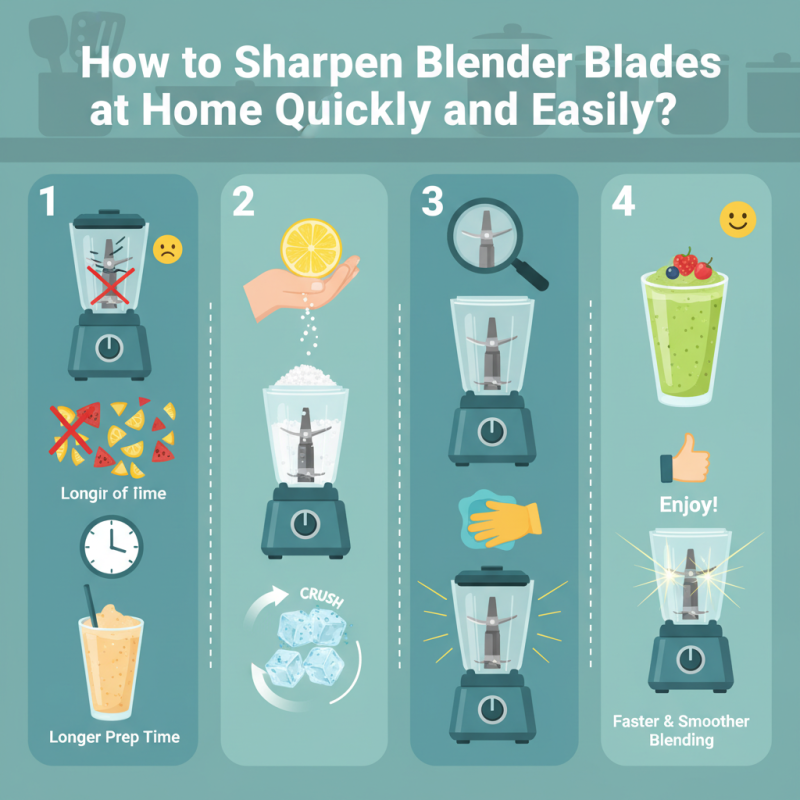
Dull blender blades can make meal prep frustrating. Recognizing the signs of dull blades is crucial for effective blending. One obvious indicator is a decrease in blending efficiency. If your smoothies or soups aren’t smooth, the blades may need attention.
Another sign is noise. Dull blades can create a grating sound rather than a smooth, whirring noise. If you notice more vibration or hear weird sounds, it might be time to inspect your blades. You may also observe that ingredients are not getting properly chopped. If chunks remain after blending, your blades are likely losing their edge.
Additionally, take note of the time it takes to blend. If recipes that used to take a minute now take several, something is amiss. Sometimes it’s subtle, but every detail matters. These signs can guide you in maintaining your blender efficiently, helping you enjoy consistent results in your kitchen.
When sharpening blender blades at home, having the right tools is essential. A honing rod is a popular choice among professionals. It helps maintain the edge of your blades effectively. A sharpening stone works well too, especially if you prefer precision. It’s important to choose the right grit; a medium grit (around 1000 to 2000) is often recommended.
Using these tools requires caution. For instance, ensure your blender is unplugged before any sharpening. Many users overlook the safety aspect, which can lead to accidents. A sturdy surface is crucial. A non-slip mat can provide stability while you work. Studies indicate that a sharp blade is 50% more efficient for blending tasks, making the effort worthwhile.
The process is not as straightforward as it seems. Many folks miss spots, resulting in uneven sharpness. Patience is key. You might also consider protective gloves to avoid cuts. In fact, reports show that most injuries in kitchens are from mishandled tools. Regular maintenance can extend the life of your blender blades significantly. Therefore, investing time in proper sharpening techniques is beneficial.
Sharpening blender blades at home can be a straightforward process. Start by gathering your tools: a sharpening stone, a cloth, and some water. A dull blade can cause ineffective blending, making your job harder. Ensure your blender is unplugged to avoid accidents.
Carefully remove the blades from the jar.
Next, wet the sharpening stone with a little water. This helps create a slurry that will aid in the sharpening. Hold the blade at an angle against the stone. Apply light pressure while moving the blade back and forth. Aim for about 10 strokes per side. It may take some practice to get this right. Remember, too much pressure can damage the blades.
After sharpening, clean the blades thoroughly. Use a cloth to remove any metal shavings. Rinse under running water. Reattach the blades to the blender once everything is dry. Test the blender with some soft ingredients to check the sharpness. If it doesn't blend well, you may need to refine your technique. Every attempt is a learning experience.
Sharpening blender blades at home can be tricky. Mistakes can lead to more harm than good. A common error is using the wrong tools. Household items like sandpaper or files may seem effective, but they can damage the blades. Instead, a specialized sharpening tool should be your go-to choice. This ensures the blade's integrity remains intact while sharpening effectively.
Another frequent mistake is applying too much pressure. Many assume that force equals better results. However, excessive pressure can create uneven edges or even break the blade. It’s essential to keep a gentle hand while sharpening. Also, forgetting to clean the blades before starting is a misstep. Residue can interfere with the sharpening process. Take the time to clean thoroughly.
Finally, overlooking safety precautions is risky. Always wear protective gloves when handling sharp blades. A slip can lead to serious injury. Practice caution to protect yourself while maintaining your kitchen tools.
Being mindful of these points will make your sharpening experience smoother and safer.
Keeping your blender blades sharp is essential for efficient blending. Dull blades can lead to longer preparation times and uneven textures. Here are some effective maintenance tips to ensure your blades remain sharp longer.
Regular cleaning is vital. After each use, wash the blades with warm soapy water immediately. Food particles can cause corrosion over time. Avoid using abrasive sponges. Instead, opt for a soft cloth to preserve the sharpness. Rinse thoroughly and dry to prevent rust.
Storing your blender properly can prolong blade sharpness. Avoid stacking heavy items on top of your blender. If possible, keep the blender upright. This reduces unnecessary pressure on the blades. On occasion, consider using a blade protector when storing. It can prevent unintentional nicks.
Routine checks for dullness matter too. If blending becomes challenging, it’s a sign your blades need attention. You might consider sharpening them or replacing if they are too worn out. Recognizing these subtle changes can save you trouble later. Regular maintenance keeps your blender running efficiently.
| Method | Description | Tools Needed | Time Required |
|---|---|---|---|
| Manual Sharpening | Use a sharpening stone to manually sharpen the blades by sliding them along the stone at an angle. | Sharpening stone | 15 minutes |
| Using Rice | Blend uncooked rice for a few seconds to polish the blades and remove debris without direct sharpening. | Uncooked rice | 5 minutes |
| Vinegar Soak | Soak the blades in vinegar to remove rust and buildup, which can improve the sharpness. | Vinegar | 30 minutes |
| Dish Soap and Water | Regular cleaning with dish soap and water can help maintain blade sharpness by preventing build-up. | Dish soap, water | 5 minutes |
: Look for decreased blending efficiency and a grating noise during use.
If chunks remain in blends or blending time increases, your blades are likely dull.
A honing rod or sharpening stone is essential. Choose a medium grit for best results.
Yes, but ensure your blender is unplugged and use protective gloves.
Avoid using household items like sandpaper, applying too much pressure, and forgetting safety measures.
Take the time to remove residue thoroughly to ensure effective sharpening.
It can lead to uneven edges, blade damage, and decreased blending performance.
Sharp blades are 50% more effective, improving efficiency and blend quality.
Consider professional sharpening or research proper techniques for better results.
Regular maintenance can extend blade life. Sharpen when blending performance decreases.
When considering "How to sharpen blender blades at home," it's important to first identify the signs of dull blades. Common indicators include difficulty blending ingredients smoothly and unusual noise during operation. Equipping yourself with essential tools such as a sharpening stone or honing tool can facilitate the sharpening process.
The step-by-step guide emphasizes the importance of safety, advising users to unplug the blender and handle the blades carefully. To avoid common mistakes, such as applying too much pressure, follow the recommended techniques for sharpening. Additionally, incorporating maintenance tips, like regular cleaning and proper storage, can help keep your blender blades sharp for a longer duration, ensuring optimal performance in your kitchen.

K-Mama Cook