When exploring the world of kitchen appliances, one question often arises: "What is the difference between a juicer and a blender?" Both devices are essential for health enthusiasts, yet they serve distinct purposes. A juicer extracts juice from fruits and vegetables, leaving behind pulp and fiber. This process results in a nutrient-rich liquid. On the other hand, a blender combines ingredients, creating smoothies or purees. It retains all components, including fiber.
Understanding these differences can impact your dietary choices. Juicing provides concentrated vitamins, while blending offers whole food benefits. Many people assume they can use one for the other, but doing so may not yield the desired results. Each appliance has its strengths and weaknesses. While juicers are ideal for quick nutrient absorption, blenders offer versatility in recipes.
Choosing between a juicer and a blender requires reflection on your health goals. Are you looking for quick nutrition or a meal replacement? Remember, neither machine is perfect. Balancing their use can lead to a varied and enjoyable diet. Make informed decisions based on your lifestyle and preferences.
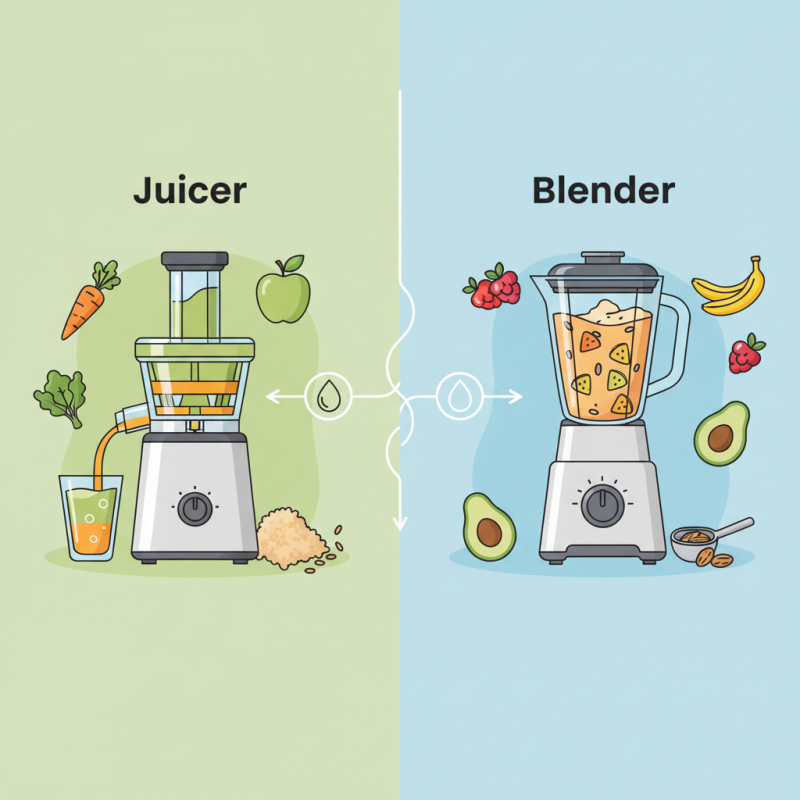
Juicer: Definition and Primary Function
A juicer is a kitchen appliance designed to extract juice from fruits and vegetables. Its primary function is to separate the liquid from the pulp effectively. Juicers work by crushing and pressing the ingredients, ensuring maximum juice yield. According to a recent industry report by the International Juice Association, juicers can retain up to 95% of the nutrients from fresh produce.
Using a juicer can be a straightforward way to increase your intake of vitamins and minerals. Many health experts suggest that juicing boosts overall wellness. However, juicing may also lead to missing out on fiber, which is crucial for digestion. This loss can make juicers less appealing for those needing a complete nutritional profile.
Tips: Always use fresh, organic produce when juicing to maximize health benefits. Additionally, clean your juicer immediately after use to prevent buildup and ensure longevity. Experimenting with combinations of fruits and vegetables can help you find the perfect blend for your tastes. Remember, the potential waste generated from pulp means that being mindful of sustainability is essential.
Blender: Definition and Primary Function
A blender is a kitchen appliance designed to mix, puree, and emulsify food and drinks. Its primary function is to create smooth textures. Blenders chop ingredients rapidly, thanks to their sharp blades. You can use them for smoothies, soups, and sauces. The power of the motor determines how well a blender performs. A stronger motor blends tougher ingredients more smoothly.
Blenders excel at creating a uniform consistency. They can handle frozen fruits and vegetables with ease. However, you might encounter challenges with tougher nuts or fibrous vegetables. Sometimes, you need to stop the blender and stir. This is a common issue that many users face. Additionally, the capacity of the blender jar can limit batch sizes.
When you’re trying to create a specific texture, knowing your blender well is crucial. It takes practice to find the right settings and times for different recipes. Remember, a blender may not achieve the same results as a juicer. Blending can retain fibers, which some may find less desirable in certain drinks. It's worth considering your preferences when choosing between blending and juicing.
Key Differences in Operation Between Juicers and Blenders
When it comes to juicers and blenders, their operations differ significantly. Juicers extract liquid from fruits and vegetables, leaving behind pulp. This process often involves a slow masticating action or a faster centrifugal action. On the other hand, blenders combine ingredients into a smooth consistency. They chop, mix, and puree, resulting in thick smoothies or soups.
Using a juicer means you get a concentrated drink, rich in vitamins. However, this method discards the fiber, which is crucial for digestive health. Blenders maintain the fiber, making smoothies more filling and nutritious. You consume the entire fruit or vegetable, gaining all its benefits.
Tips: Aim to balance both types in your diet. Juicing is refreshing, but blending retains more nutrients. Experiment with combinations to discover flavors you love. Consider your goals; if weight loss is a priority, fiber-rich smoothies help you feel satiated longer. If hydration is key, fresh juice can be invigorating but remember to enjoy it sporadically. Think about sustainability too. Both methods can create kitchen waste, so find a way to repurpose the leftover pulp or fibers for baking or composting.
Juicer vs Blender: Key Differences
| Feature |
Juicer |
Blender |
| Function |
Extracts juice by separating liquid from pulp |
Pulses and blends whole ingredients into a smoothie or mixture |
| Best for |
Juicing fruits and vegetables |
Making smoothies, soups, sauces |
| Texture of Result |
Liquid with no pulp |
Thick and creamy texture |
| Nutrient Retention |
May lose some fiber |
Retains fiber and nutrients |
| Preparation Time |
Usually requires chopping fruits/vegetables |
Can blend whole ingredients (depending on power) |
| Clean-up |
Can be time-consuming due to multiple parts |
Generally easier to clean |
Nutritional Differences: Juice vs. Smoothie
When examining the nutritional differences between juice and smoothies, it’s essential to understand their composition.
Juice primarily consists of extracted liquid from fruits or vegetables. It often loses fiber in the process.
According to a report from the USDA, most juices are low in fiber but high in vitamin C and some phytochemicals.
This concentrated nutrient profile can provide a quick energy boost, but the absence of fiber may lead to rapid spikes in blood sugar.
Smoothies, on the other hand, include whole fruits and vegetables. They retain most of the fiber, offering several health benefits.
A study published in the Journal of Nutrition showed that fiber aids digestion and helps maintain a healthy weight.
The presence of fiber in smoothies slows down the absorption of sugars. An average smoothie can contain around 4 grams of fiber per serving, while juice typically has very little to none.
However, smoothies can also contain added sugars or calorie-dense ingredients, which may offset their health benefits.
It’s crucial to consider the overall composition of both options. Choosing wisely based on individual dietary needs is important.
Each approach offers unique advantages and potential drawbacks, highlighting the need for mindful consumption.
Best Uses and Ideal Recipes for Juicers and Blenders
When it comes to choosing between a juicer and a blender, understanding their best uses is essential. Juicers extract liquid from fruits and vegetables. This process removes pulp and fiber, resulting in a smooth beverage rich in vitamins. For instance, a report from the International Journal of Food Science highlights that fresh juices have higher nutrient absorption rates. Ideal recipes for juicers include citrus-based drinks or green juices with kale and spinach.
Blenders, on the other hand, retain all the fiber. They create thicker smoothies, sauces, and soups. Research indicates that fiber-rich diets promote digestive health. Smoothies made with banana and berries can be filling and nutritious. Blender recipes can also include nut butters or frozen desserts, providing versatile options.
Tip: If you prefer the health benefits of smoothies without added sugars, opt for whole fruits and vegetables.
Choosing the right appliance often depends on personal health goals. Those seeking quick nutrient intake may favor juicers. Meanwhile, individuals focused on satiety and fiber intake might choose blenders. Both options have their merits, but understanding their unique benefits can lead to better health choices.
Tip: Experiment with different recipes to discover your favorite combinations.
Juicer vs Blender: Key Differences in Usage and Recipe Suitability
FAQS
: A juicer extracts juice from fruits and vegetables, separating liquid from pulp effectively.
Juicers can retain up to 95% of nutrients from fresh produce during extraction.
Juicing can boost vitamin and mineral intake, promoting overall wellness.
Juicing often removes fiber, which is essential for healthy digestion.
Juice lacks fiber, while smoothies retain it, offering different health benefits.
Yes, smoothies may contain added sugars or calorie-dense ingredients that reduce health benefits.
Always choose fresh, organic produce to maximize health benefits from juicing.
Cleaning your juicer immediately after use prevents buildup and ensures its longevity.
Yes, the pulp generated can be wasteful, highlighting the need for mindful consumption.
Experiment with combinations of fruits and vegetables to discover your favorite flavors and nutrients.
Conclusion
When considering what is the difference between a juicer and a blender, it is important to understand their definitions and primary functions. A juicer is designed to extract juice from fruits and vegetables, removing the pulp to yield a clear liquid that's rich in vitamins and nutrients. In contrast, a blender combines ingredients into a smooth mixture, maintaining all the fiber content of the fruits and vegetables, resulting in smoothies.
The operational differences between these two appliances lie in their mechanics; juicers typically use centrifugal force or masticating methods to separate juice from pulp, while blenders chop and mix everything together. Nutritionally, juice provides a concentrated source of vitamins, while smoothies retain fiber, contributing to a more filling option. Ultimately, the best use of each appliance varies: juicers are ideal for quick nutrient intake, while blenders can create heartier, more substantial drinks and recipes.

 K-Mama Cook