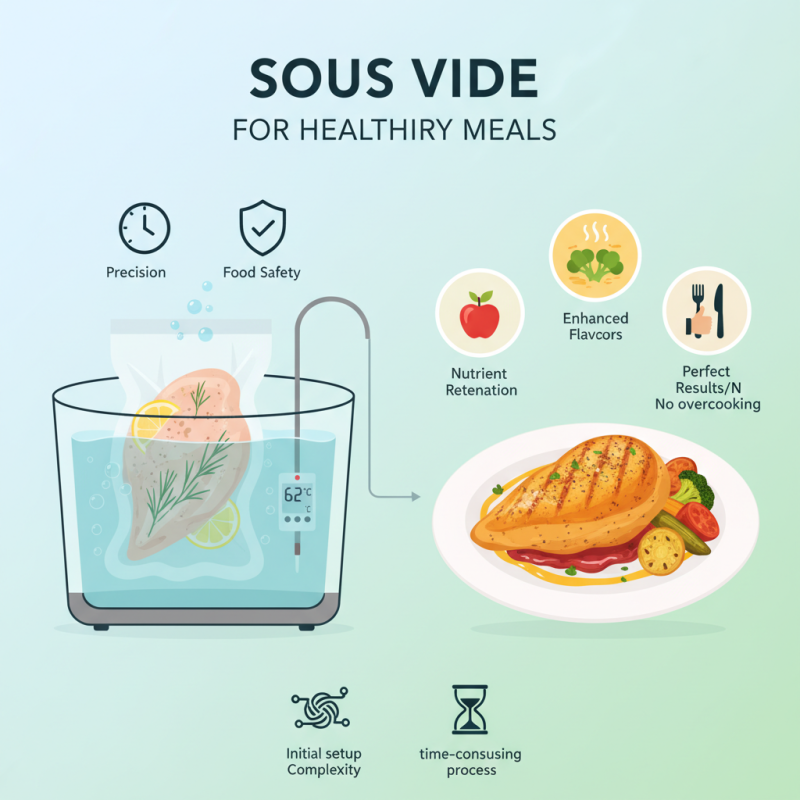
Sous vide cooking is an exciting technique that ensures meal preparation is both precise and healthy. Chef Thomas Keller, an authority in this culinary method, states, "Sous vide allows us to achieve exact temperatures and perfect results consistently." This precision is a key reason many are asking, "What are the benefits of sous vide cooking?"
One main advantage is food safety. Cooking food in a vacuum-sealed bag at a controlled temperature eliminates bacteria. This approach retains nutrients far better than traditional cooking methods. Additionally, sous vide enhances flavors, making meals more enjoyable. Overcooking becomes nearly impossible, so every meal can taste just right.
However, sous vide isn't completely without its challenges. The setup may seem complex at first, and the cooking process can be time-consuming. Still, many find that the results outweigh these drawbacks. Exploring this method can be a fun way to embrace healthier eating, one precise meal at a time.
Sous vide cooking is increasingly recognized for preserving nutrients in food. Studies show that sous vide can retain up to 90% of vitamins and minerals. Traditional cooking methods often lead to significant nutrient loss. For example, boiling vegetables can reduce vitamin C by 50% or more. In contrast, sous vide allows food to cook in a vacuum-sealed bag at lower temperatures.
The process provides a controlled environment. This minimizes oxidative damage and prevents nutrient degradation. In a 2014 research article published in the Journal of Food Science, sous vide retains more anthocyanins in vegetables compared to boiling. Anthocyanins are important antioxidants linked to health benefits. When food cooks evenly in its juices, it maintains flavor and texture, providing a holistic dining experience.
However, sous vide cooking requires some practice. Precise temperature control is crucial to avoid undercooked or overcooked meals. Moreover, not every food performs well in this cooking method. The learning curve may deter some, yet the health benefits make it worth considering. People need to explore the potential of sous vide. It's a game changer for health-conscious cooking.
Sous vide cooking has gained popularity for its ability to enhance meal quality. This technique involves precise temperature control, which serves to cook food evenly and retain moisture. Traditional cooking methods often lead to overcooked or dry meals. However, sous vide allows proteins and vegetables to maintain their natural texture and flavor.
Cooking times in sous vide can be significantly longer compared to conventional methods. Yet, this extended duration does not negatively impact meal quality; rather, it enhances it. For example, a steak cooked sous vide for two hours can achieve tenderness that short cooking times simply can't match. Vegetables, too, remain vibrantly colored and nutritious.
Yet, there are challenges to consider. Overcooking is still possible, especially if the temperature is too high. Personal experimentation may be required to find the ideal cooking time and temperature. The need for a vacuum sealer might deter some cooks due to the initial investment. Despite these aspects, the benefits of sous vide cooking often outweigh the drawbacks, leading to healthier and more enjoyable meals.
Sous vide cooking offers a unique approach compared to traditional methods. In sous vide, food is vacuum-sealed and cooked slowly at a precise temperature. This prevents nutrient loss that often occurs with boiling or frying. Think about vegetables cooked in water. They can lose up to 50% of their vitamins. Sous vide retains those vitamins, keeping meals healthier.
Traditional cooking methods often depend on higher heat and longer cooking times. This can lead to overcooking and drying out proteins. For example, a chicken breast cooked on high heat can easily become tough and rubbery. Sous vide, however, cooks it evenly. The result? Juicier, more flavorful meat.
Not everything about sous vide is perfect. The initial setup can be daunting. It requires specific tools and a learning curve. Some find it difficult to achieve the same flavor profile as traditional roasting or grilling. This method emphasizes patience and precision. It might not be suitable for every meal or every cook. Adapting to sous vide can take time, but the benefits in nutrition are significant.
Sous vide cooking has gained popularity for its ability to deliver healthier meals. The technique involves sealing food in a vacuum bag and cooking it slowly in water at a precise temperature. This method helps retain nutrients that are often lost in traditional cooking. According to a report by the Culinary Institute of America, sous vide cooking can preserve food's original vitamins better than conventional methods.
One major advantage of sous vide is its low-temperature cooking. This allows proteins to stay tender and juicy while reducing the need for added fats. Research indicates that cooking at lower temperatures can enhance nutrient retention by up to 30%. This results in meals that are delicious and better for your health.
Tip: When cooking vegetables sous vide, choose a variety of colors. This ensures a wider range of nutrients.
However, sous vide does require careful timing. Overcooking can lead to an undesirable texture. Pay attention to cooking times and test different vegetables. Finding the sweet spot is essential for optimal taste and health benefits.
Tip: Use a food thermometer to check if your meal reached the desired temperature accurately.
With sous vide, preparation becomes a blend of science and art. Experimenting can sometimes lead to unexpected results. Reflecting on your experience will help you improve your technique and create healthier meals.
The rise of sous vide cooking aligns well with current health-focused dietary trends. A recent report from the Culinary Institute of America highlights a 25% increase in sous vide adoption among health-conscious consumers. This method allows precise temperature control, leading to better nutrient retention in foods. With the ability to cook proteins evenly and without excess fat, sous vide transforms traditional meals into healthier options.
Many people struggle with meal prep and nutrition. A survey by the National Restaurant Association found that 43% of consumers want healthier options when dining out. Sous vide meets this demand by allowing home cooks to prepare nutritious meals that are still flavorful. This technique often highlights fresh ingredients while minimizing added preservatives and unhealthy fats.
However, there are challenges. Some chefs believe that sous vide lacks the depth of flavor achieved through traditional cooking methods. This perception can hinder broader acceptance. The technology also requires investment in specialized equipment, which may not be accessible to all. Despite these hurdles, the sous vide cooking trend is gaining traction, as more individuals recognize the value it brings to healthier eating habits.
: Sous vide cooking involves sealing food in a bag and cooking it in a temperature-controlled water bath.
Sous vide can retain up to 90% of vitamins and minerals, unlike traditional methods that cause significant nutrient loss.
Proteins and vegetables often perform well, but not every food is suitable for this method.
Sous vide cooking preserves flavor and texture, while boiling can reduce vitamins significantly.
It requires practice, as precise temperature control is important to avoid meal errors.
Some people feel it lacks flavor depth compared to traditional methods, which could limit its popularity.
Yes, it offers a way to prepare nutritious meals with fresh ingredients and less fat.
Specialized equipment is required, and it may not be accessible to everyone.
It's seeing a 25% increase in adoption among health-conscious consumers, indicating growing interest.
The learning curve and perception of flavor depth can be hurdles to broader acceptance.
Sous vide cooking has gained popularity as a method for preparing healthier meals, primarily due to its ability to retain nutrients in food. By cooking food in a vacuum-sealed bag at consistent low temperatures, this technique minimizes nutrient loss while also enhancing flavors. What are the benefits of sous vide cooking? One major advantage is its precision, which ensures that meals are cooked evenly without the risk of overcooking, thus improving overall meal quality.
Additionally, sous vide significantly reduces cooking times compared to traditional methods, making it easier for health-conscious individuals to prepare nutritious meals efficiently. The rise of sous vide cooking is also reflected in industry trends, as more people turn to this technique to align with health-focused diets. With various techniques available for sous vide preparation, individuals can explore creative ways to enjoy wholesome meals without sacrificing taste.

K-Mama Cook