Choosing a food processor blade is not as simple as comparing shiny stainless steel photographs. Blade shape, shaft size, bowl compatibility, cutting angle, and material quality can affect every preparation. A blade that handles carrots smoothly may struggle with frozen fruit or dense dough. Small details matter.
This guide examines China’s top 10 food processor blades through practical selection criteria. It considers slicing blades, chopping knives, shredding discs, dough blades, and multifunction designs. Each option should be checked for food-contact safety, corrosion resistance, balance, and manufacturing consistency. Reliable suppliers should provide dimensions, material information, production samples, and traceable quality records. In real purchasing work, these details often reveal more than a low quotation.
The central question is: How to choose the right blade for a food processor? Start with the processor model, daily ingredients, required speed, and expected workload. Then compare blade thickness, edge design, mounting accuracy, and cleaning requirements. Some manufacturers offer impressive catalogs, but catalog images cannot prove long-term performance. Testing is essential. Even careful rankings have limits, because factories update designs and batch quality may vary. That is worth remembering.
You will find practical comparisons in this article. The goal is not to praise one supplier blindly. It is to help buyers, kitchen equipment brands, and distributors make safer, more informed decisions when selecting Chinese food processor blades. A suitable blade should cut consistently, fit securely, and remain dependable after repeated use. Fancy packaging is not enough.
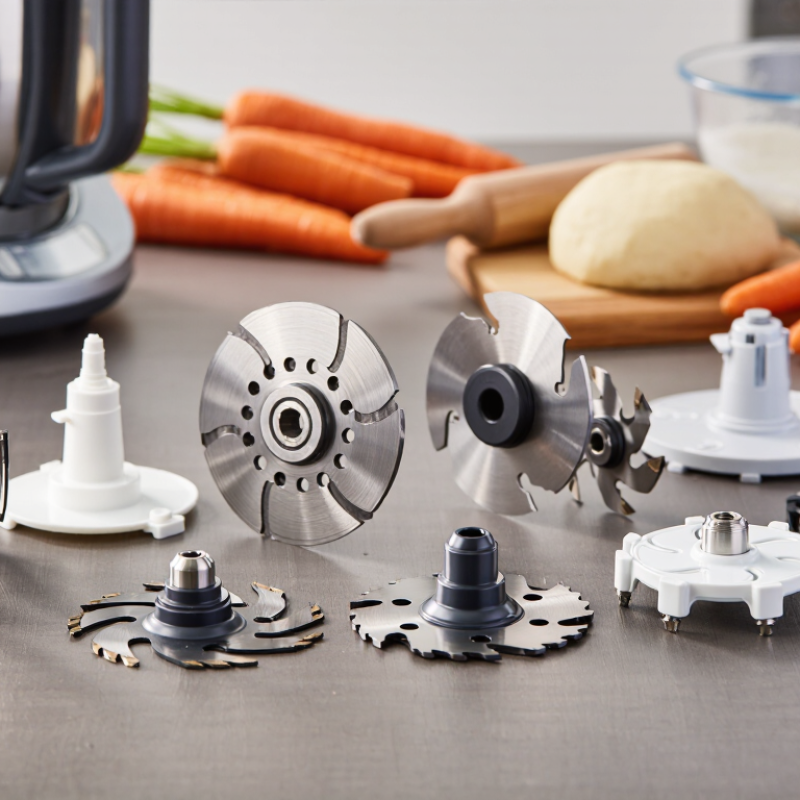
Food processor blades determine texture, speed, and preparation quality.
The S-shaped chopping blade handles onions, herbs, meat, nuts, and sauces. Its curved edges create a rotating cutting pattern.
A slicing disc produces even cucumber or potato rounds. A shredding disc turns carrots, cheese, or cabbage into narrow strands.
The dough blade uses broader, less aggressive edges for kneading. It should not replace a chopping blade for hard ingredients.
Market data supports careful selection.
Grand View Research reports that the global food processor market is expected to grow at a mid-single-digit compound annual growth rate through 2030. This growth reflects demand for faster home preparation and multifunctional equipment.
However, more functions do not always mean better results. Blade thickness, bowl capacity, motor strength, and ingredient quantity must match.
I have found that overfilling causes uneven pieces, even with a sharp blade.
Tips:
Choose an S blade for mixed chopping.
Use discs for consistent slices or shreds.
Select a dough blade for soft dough.
Check the manual before crushing ice or very hard foods.
Keep ingredients similar in size.
Small details matter. According to professional food safety guidance from the U.S. Department of Agriculture, clean removable parts promptly after food contact.
A blade may look clean but retain residue near its central hub.
I still prefer testing one small batch first, because published specifications cannot predict every kitchen’s result.
Choosing among China’s top 10 food processor blades requires more than comparing prices. Blade geometry, steel quality, balance, and safety performance matter during daily preparation. According to Grand View Research’s 2024 food processor market analysis, demand is supported by compact kitchen appliances and rising home cooking. That trend increases the need for durable replacement blades.
A reliable blade usually uses food-contact stainless steel with strong corrosion resistance. Look for a thickness that matches the processor’s motor power. Thin edges may slice quickly, but they can bend when processing nuts or frozen vegetables. Curved blades improve circulation inside the bowl, while micro-serrated edges can handle fibrous ingredients. Poor balance causes vibration. It also increases noise.
Check measurable details. ISO 8442-1 provides useful guidance for cutlery materials and corrosion resistance, although it does not certify every food processor blade. Ask suppliers for material certificates, hardness results, dimensional checks, and repeated-load testing. A 2023 report from the China Household Electrical Appliances Association noted continuing attention to appliance safety and quality control, but supplier claims still require verification.
A polished surface can mislead. I would inspect the hub, welds, and locking fit first. The blade should rotate smoothly without scraping the bowl. Dishwasher resistance is helpful, yet repeated high heat may dull edges or weaken plastic mounts. Even a strong blade can fail when overloaded. That detail is easy to overlook.
China Top 10 Food Processor Blades: How to Choose the Right One?
Blade selection should follow the task, not the machine’s appearance. An S-blade suits onions, herbs, nuts, and coarse chopping. A slicing disc creates even cucumber or potato cuts. Shredding discs work better for carrots, cabbage, and cheese. For dough, choose a blunt kneading blade with a stable hub. An emulsifying blade helps combine oil, eggs, and sauces smoothly. There are ten useful profiles, but one blade rarely performs every job well.
Food texture matters. Use a sharp, fine-edge blade for puree, but avoid it for hard bones or frozen blocks. A julienne blade needs firm vegetables and steady feeding. A dicing grid requires matching blade spacing; otherwise, cubes become uneven. FAO reported that 13.2% of food was lost globally before retail in 2021, so consistent cutting can support better portion control and reduce trim waste. That sounds simple, but operator technique still changes the result.
Hygiene is equally important. The FDA Food Code 2022 emphasizes smooth, corrosion-resistant, and easily cleanable food-contact surfaces. Select blades with accessible joints and minimal residue traps. Check thickness, hardness, and shaft compatibility before ordering. In real kitchens, this step is often skipped. It should not be. A blade that cuts quickly but creates heat, vibration, or difficult cleaning may be the wrong choice. Test a small batch first.
China Top 10 Food Processor Blades: How to Choose the Right One?
When comparing the top ten food processor blades, begin with the material. Food-contact stainless steel offers corrosion resistance and dependable edge retention. Hardened steel can stay sharp longer, but it may require careful cleaning. Avoid blades with pitting, loose rivets, or uneven surfaces. I have found that a slightly heavier blade often feels more stable during chopping. Still, weight alone proves little.
Size must match the bowl and drive shaft precisely. Measure the blade diameter, central hub, shaft opening, and cutting height. A blade that looks similar may still fail to lock correctly. Check the processor’s model information before ordering. Small differences can cause wobbling, poor results, or damage. This is easy to overlook. Slicing, shredding, chopping, and kneading blades also use different shapes. Choose the function before judging appearance.
Compatibility and safety deserve equal attention. The blade must fit the bowl, lid, spindle, and locking mechanism without force. Never rely on a loose fit. During inspection, check for hairline cracks, bent edges, and worn plastic connectors. Unplug the appliance before changing attachments, and carry sharp blades by the hub, not the cutting edge. Cut-resistant gloves can help during washing, although they cannot replace careful handling. Follow the cleaning instructions, since some blades lose their finish in unsuitable dishwashers. My own selection process is not flawless; I once focused on sharpness and ignored the connector design. That mistake made the blade unusable.
| No. | Blade or Disc Type | Typical Application | Common Material | Typical Size Range | Suitable Bowl Capacity | Compatibility Criteria | Safety Selection Points |
|---|---|---|---|---|---|---|---|
| 1 | Universal S-Blade | Chopping vegetables, herbs, nuts, meat, and making dips or purées. | Hardened stainless steel cutting blade with a food-grade polymer hub. | Blade diameter: approximately 120–185 mm; two-level or offset cutting profile. | 1.5–4.0 L bowls, depending on shaft height and working clearance. | Match the center hub shape, shaft diameter, locking mechanism, and bowl height. | Use the supplied blade guard when stored; never reach into the bowl while the motor is connected. |
| 2 | Dough Kneading Blade | Mixing and kneading bread, pizza, and pastry dough at low to medium speed. | Food-grade stainless steel or reinforced food-contact polymer with a stainless insert. | Diameter: approximately 115–175 mm; thicker and less sharply edged than an S-blade. | 2.0–4.0 L bowls; capacity depends on dough weight and motor torque. | Check the drive socket, vertical clearance, bowl volume, and the processor's permitted dough load. | Do not exceed the stated flour or dough capacity; stop the appliance if the blade stalls or overheats. |
| 3 | Reversible Slicing Disc | Producing thin or thick slices of potatoes, cucumbers, carrots, fruit, and cheese. | Stainless steel disc with a formed or bonded cutting edge and a food-grade center hub. | Disc diameter: approximately 160–220 mm; slice thickness commonly 1–6 mm. | 2.0–4.0 L bowls with a matching feed tube. | Confirm disc diameter, spindle height, feed-tube opening, and whether the hub is reversible. | Use the pusher rather than hands; keep fingers above the feed tube and wait until the disc stops. |
| 4 | Julienne or Matchstick Disc | Cutting firm vegetables and potatoes into narrow strips for salads, stir-fries, and garnishes. | Hardened stainless steel with raised cutting teeth or precision-formed slots. | Disc diameter: approximately 160–220 mm; strip width commonly 2–4 mm. | 2.0–4.0 L bowls with a compatible feed tube. | Match the disc locking slots, central hub, rotation direction, and bowl-to-disc clearance. | Handle only by the outer rim; the raised teeth remain sharp even when the appliance is unplugged. |
| 5 | Fine or Coarse Grating Disc | Grating cheese, carrots, chocolate, potatoes, and firm vegetables. | Perforated or etched stainless steel cutting surface with a reinforced disc body. | Disc diameter: approximately 160–220 mm; hole or tooth size commonly 1–5 mm. | 2.0–4.0 L bowls, subject to feed-tube and spindle compatibility. | Verify grating grade, disc diameter, center opening, locking tabs, and feed-tube alignment. | Do not press food with excessive force; use the pusher and clean with a brush, not bare fingers. |
| 6 | Whisk or Emulsifying Disc | Whipping cream, beating egg whites, and blending light dressings or mayonnaise. | Food-grade polypropylene or nylon body, sometimes combined with stainless steel wires. | Diameter: approximately 120–180 mm; low-load, high-clearance design. | 1.5–3.0 L bowls, depending on whisk height and ingredients. | Check shaft length, bowl clearance, rotation speed limit, and whether the disc is designed for liquid mixtures. | Avoid hot liquids and heavy mixtures; inspect the whisk for cracks or loose wires before use. |
| 7 | Citrus Press Cone and Filter | Extracting juice from oranges, lemons, limes, and similar soft citrus fruit. | Food-grade polypropylene or Tritan-style plastic cone with a polymer filter basket. | Cone height: approximately 90–145 mm; designed for citrus halves rather than whole fruit. | 1.5–4.0 L bowls with a compatible drive shaft and filter assembly. | Confirm the cone drive interface, filter-basket diameter, bowl rim support, and splash clearance. | Use moderate hand pressure; remove seeds and inspect the filter for damage before operation. |
| 8 | Emulsifying Paddle | Preparing mayonnaise, sauces, whipped mixtures, and controlled liquid additions. | Food-grade polymer paddle with a stainless steel or reinforced polymer drive hub. | Diameter: approximately 110–170 mm; designed with a slow-feed opening or drip channel. | 1.5–3.0 L bowls with sufficient headspace for liquid expansion. | Check the paddle height, liquid-seal arrangement, shaft engagement, and maximum operating speed. | Do not use with boiling liquids; keep the bowl cover locked to prevent splashing and leakage. |
| 9 | Fine Mincing Blade | Making finely minced meat, fish, garlic, ginger, chili, and smooth vegetable mixtures. | High-carbon stainless steel cutting edges with a corrosion-resistant food-contact finish. | Blade diameter: approximately 120–180 mm; narrow edge profile for repeated chopping. | 1.5–3.0 L bowls; smaller batches generally provide more even results. | Match hub depth, blade orientation, bowl base clearance, and the appliance's permitted food type. | Chill meat or fish before processing; cut food into small pieces and clean the blade promptly after use. |
| 10 | Adjustable Thickness Slicing Disc | Producing variable slices for vegetables, fruit, potatoes, and selected soft foods. | Stainless steel blade mounted on a food-grade polymer disc with an adjustable mechanism. | Disc diameter: approximately 170–220 mm; adjustable thickness commonly 1–10 mm. | 2.0–4.0 L bowls with an adjustable-disc-compatible spindle. | Confirm adjustment range, disc locking system, feed-tube size, and clearance at the thinnest setting. | Set thickness only while the appliance is off; lock the adjustment mechanism before processing. |
Choosing among China’s top 10 food processor blade suppliers requires more than comparing prices. The right blade must match your machine’s shaft, bowl, speed, and torque. Measure the hub diameter, blade thickness, hole position, and rotation direction before contacting suppliers. A small mismatch can create vibration, poor cutting, or equipment damage.
Ask each supplier for material details, hardness records, surface treatment information, and food-contact compliance documents. Stainless steel quality matters, especially when blades meet moisture, salt, or acidic ingredients. Request samples made with the same process as mass production. Test them with real ingredients, not only empty-bowl trials. Check cutting consistency, noise, balance, and edge wear after repeated cycles. A smooth edge is not always a durable edge.
Compare more than the quotation. Review production experience, inspection procedures, tolerance control, packaging, lead time, and after-sales response. Reliable suppliers should explain their testing methods clearly. They should also provide batch identification and inspection records. I once focused too heavily on unit cost and overlooked replacement speed. That decision caused unnecessary downtime. My comparison method still needs improvement. Suppliers may also promise identical samples and production results, but verification remains essential. Choose the supplier that communicates precise limits, accepts practical testing, and can consistently produce blades suited to your machine.
Use this comparison as a practical buying guide. The scores represent the relative importance of each criterion when comparing food processor blade suppliers and checking compatibility with your machine; they are not manufacturer ratings.
Prioritize exact machine compatibility first, followed by stainless-steel quality, blade thickness, cutting performance, corrosion resistance, safety, and cleaning convenience. A blade with a high score is not automatically suitable unless its diameter, center hub, locking system, and working height match your food processor.
Use an S-shaped chopping blade. Its curved edges circulate ingredients while cutting. Cut ingredients into similar sizes first. Small batches help.
Use a slicing disc. It produces consistent rounds with steady thickness. Keep the food upright. Do not force large pieces.
Choose a shredding disc. It creates narrow strands quickly. Feed firm ingredients slowly. Soft pieces may become uneven.
No. A dough blade has broad, gentler edges for soft dough. It should not replace a chopping blade. That mistake can strain the appliance.
Food-contact stainless steel offers corrosion resistance and reliable edge retention. Inspect for pits, loose rivets, and rough surfaces. Polished metal alone proves little.
Measure the bowl diameter, central hub, shaft opening, and cutting height. Confirm the model information before ordering. Similar-looking parts may not lock safely.
Unplug the appliance before changing attachments. Check for cracks, bent edges, and worn connectors. Carry the blade by its hub. Never trust a loose fit.
Clean removable parts promptly after food contact. Residue can hide near the central hub. Follow the cleaning instructions. Test one small batch first; published specifications cannot predict every kitchen.
Choosing the right food processor blade starts with understanding the main blade types and their core functions. Standard S-shaped blades are suitable for chopping, blending, and mixing, while slicing discs, shredding discs, kneading blades, and specialized cutting blades support more specific tasks. When reviewing China’s top 10 food processor blades, focus on cutting performance, durability, edge sharpness, balance, and ease of cleaning rather than appearance alone. Each blade should be matched to the ingredients, processing volume, and desired result.
To answer “How to choose the right blade for a food processor,” evaluate the blade’s material, size, thickness, connection design, and compatibility with your machine. Stainless steel can provide strength and corrosion resistance, while the correct diameter and center fitting ensure stable operation. Safety features, secure locking, smooth handling, and easy maintenance are also essential. Finally, compare suppliers by product consistency, quality control, customization support, packaging, delivery reliability, and after-sales communication to select a dependable blade for long-term use.

K-Mama Cook